MNTN - Slack-connected KPI Tracking AI Agent
Designed and built a Slack-connected AI agent that gave two previously unmonitored content-request dashboards their first real-time KPI visibility, eliminating manual status reporting for leadership and six SME teams.
AI reporting agent that gives cross-functional teams real-time visibility into content request status.
Context
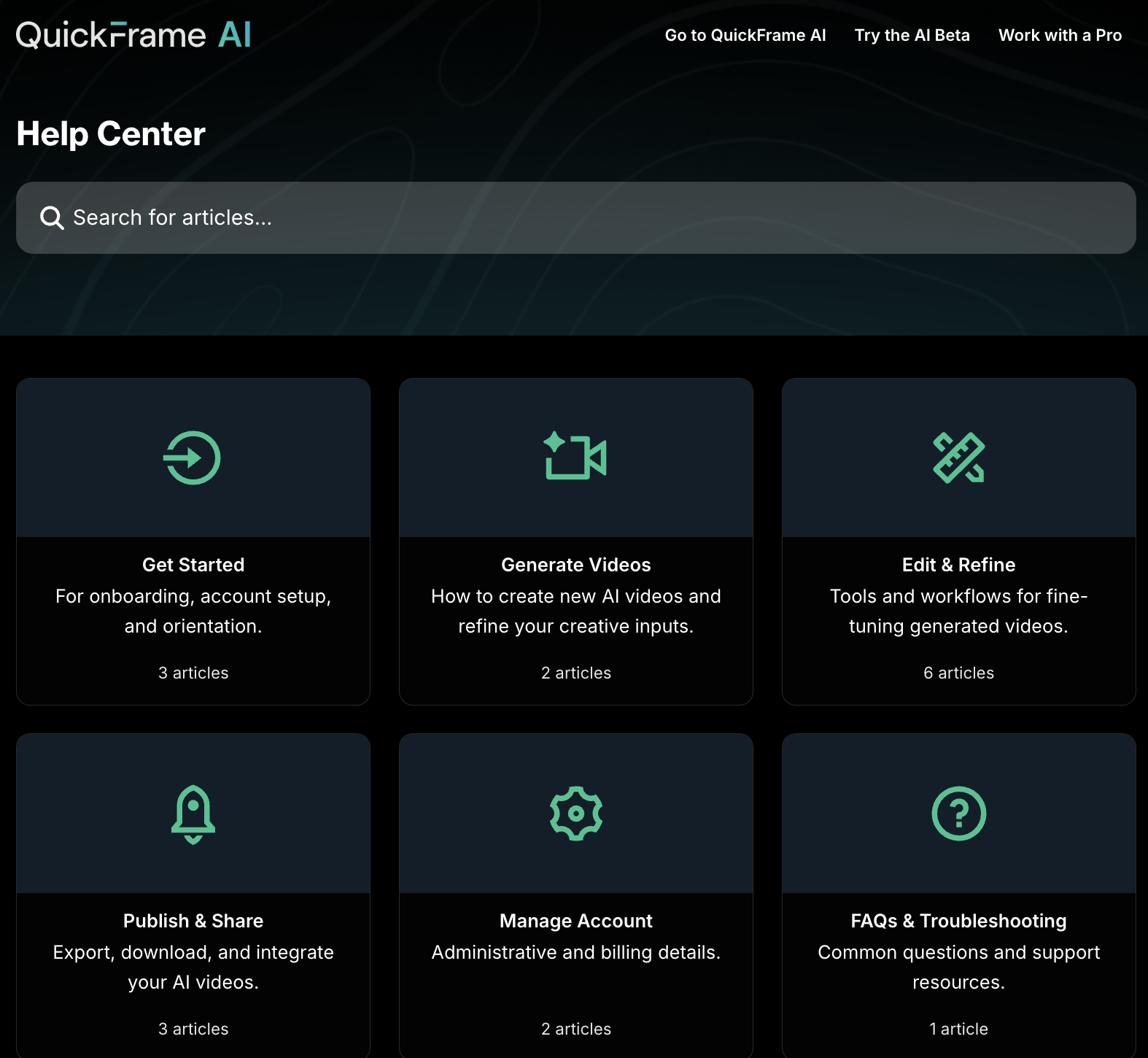
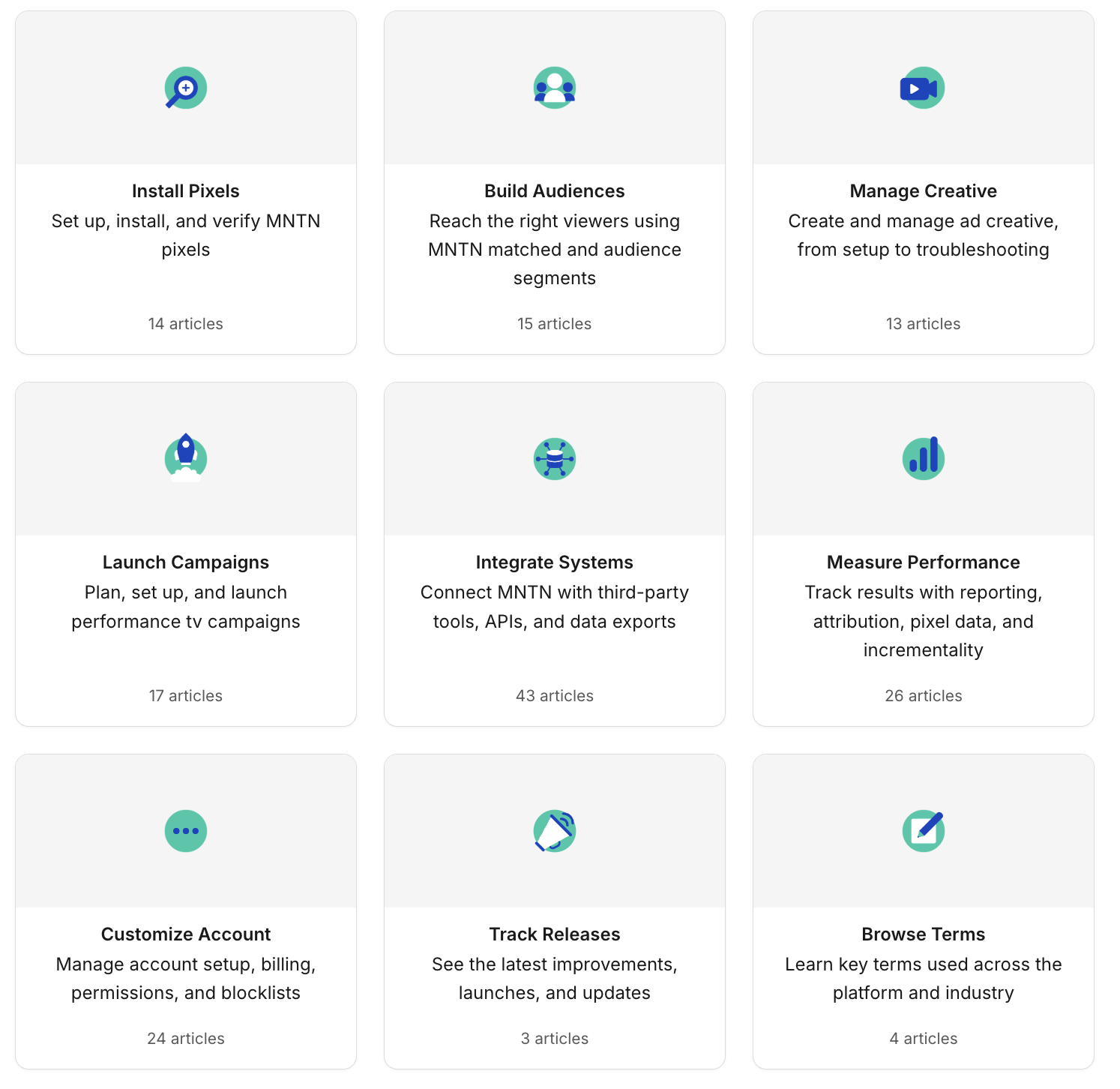
Two help centers, MNTN Performance TV and QuickFrame Marketplace, ran on separate request trackers with no shared visibility into volume or status, just manual, ad hoc reporting whenever a stakeholder asked. Six cross-functional SME teams had no single place to check where a request stood, and status updates ate time that could go toward the reviews themselves.
My approach
Solved the data access problem first
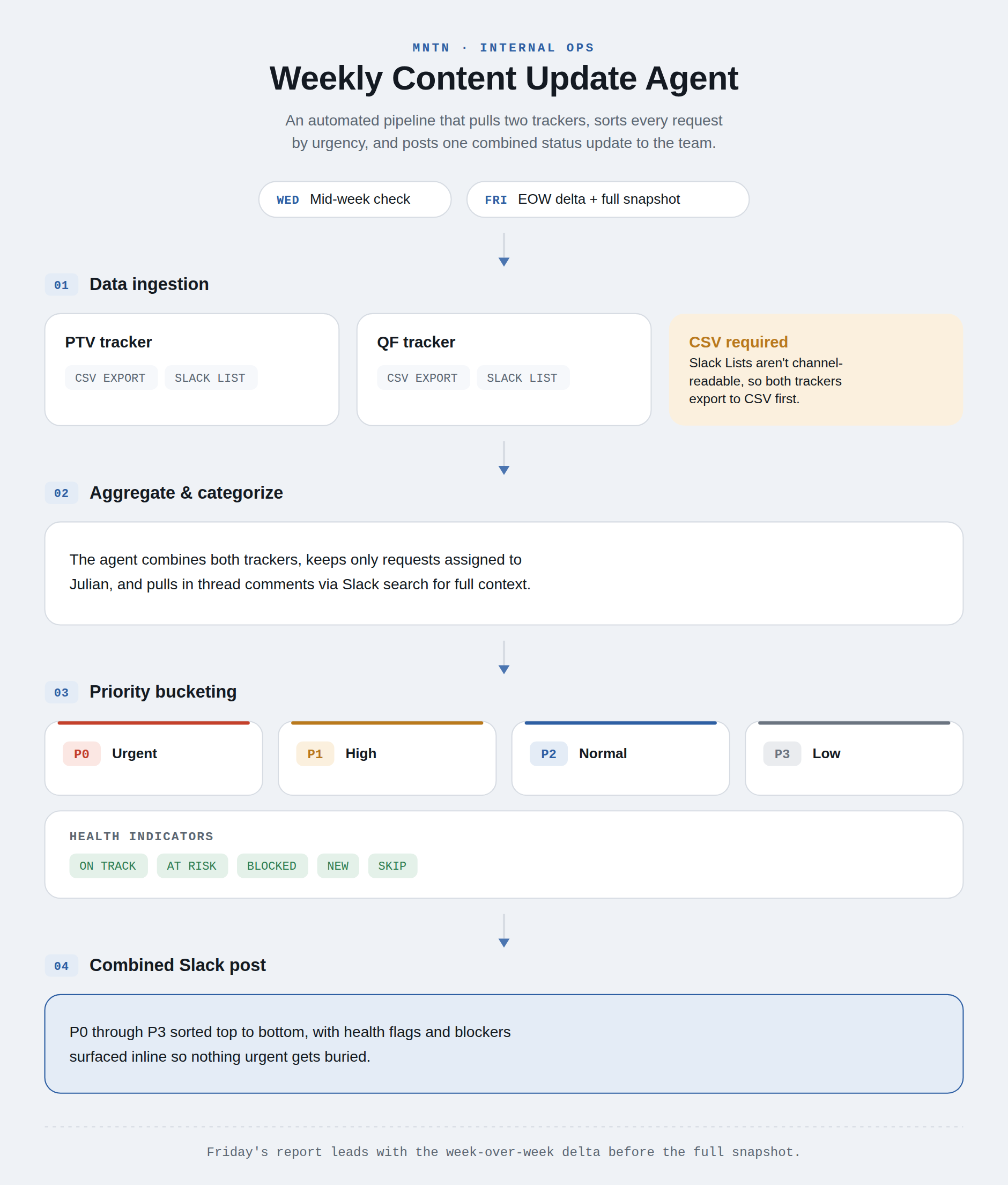
Slack Lists, where both trackers lived, aren't readable directly through a channel integration. The actual fix was a CSV export step feeding the aggregator, a root-cause data issue that had to be solved before any reporting logic could run.
Built two Claude Cowork skills, chained together
An aggregator skill combined both trackers' data and bucketed every request P0 through P3 with a health flag, on track, at risk, or blocked. A weekly-update skill turned that bucketed data into a formatted Slack post automatically.
Designed the cadence around what leadership and stakeholders actually needed
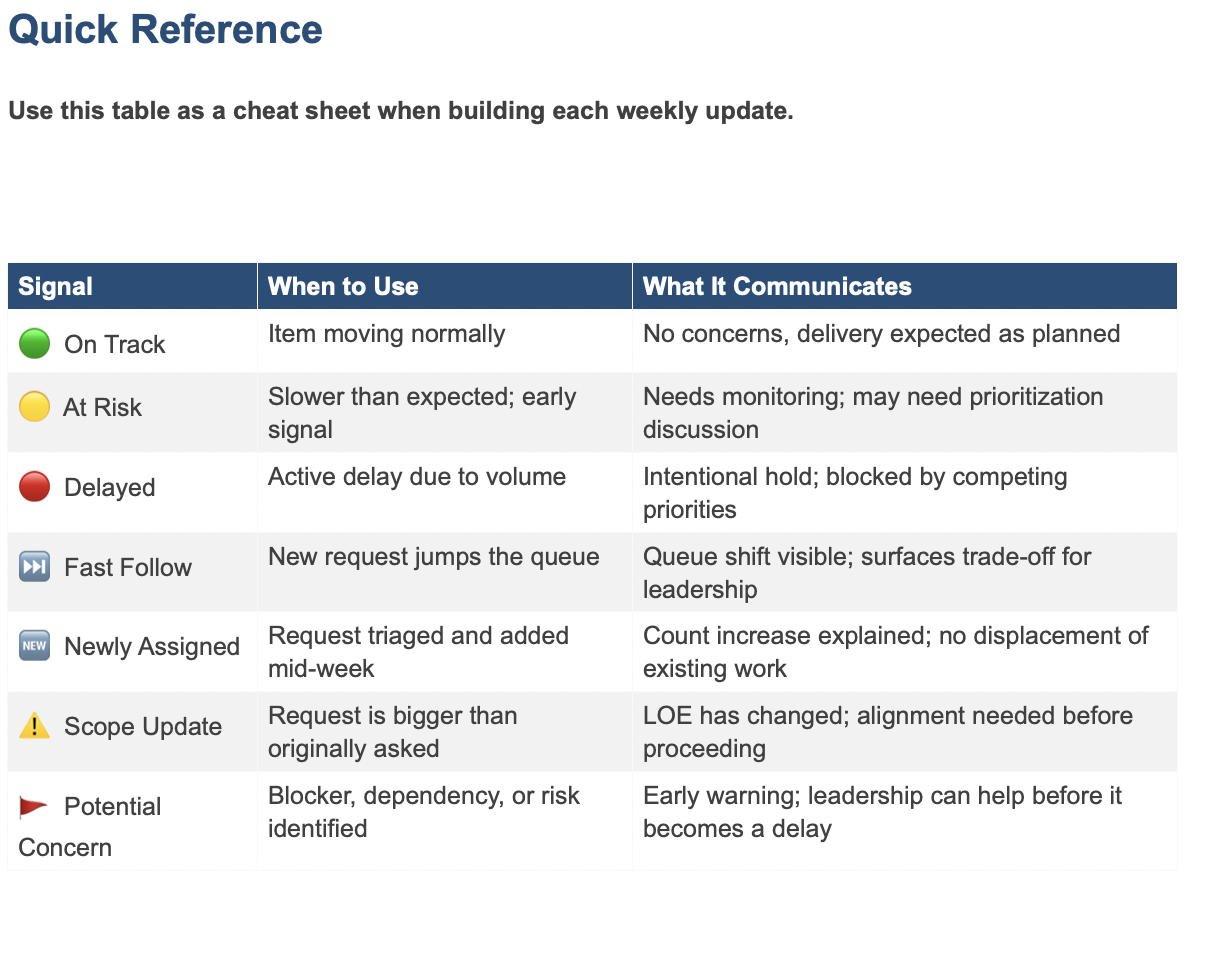
Posted twice weekly rather than once, a mid-week Wednesday status check and a Friday summary that led with what changed since Wednesday, specifically flagging anything newly added or grown bigger in scope than originally requested, rather than restating the full list every time.
Results
First-ever KPI tracking for two previously unmonitored help center dashboards. Stakeholders stopped having to ask for status updates, freeing that time for the SME reviews the Annual Content Review Cycle depends on (see Annual Content Review Cycle and Governance).
Built as a standalone system alongside the AI-assisted drafting pipeline (see AI Implementation Strategy), using the same Claude Cowork skill architecture to solve a reporting problem rather than a content-production one.